Comparing Spendesk with Pleo?
Spendesk and Pleo are both European spend management platforms offering corporate cards and expense management. Spendesk is designed for businesses looking to manage a broader range of spend processes, including procurement and accounts payable, while Pleo has a strong focus on cards and expense management. The right choice depends on your company's size, workflows and finance requirements.
 4.7/5
4.7/5 4.8/5
4.8/5)
Credible enough for finance.
Practical enough for the business.
That matters because the best finance process is not just controlled. It is actually used.


















How Spendesk compares with Pleo for UK finance teams

One-click experience
Direct reimbursement (Pleo Wallet and bank transfer EU/UK)
End-to-end: POs, delivery notes, invoices & credit notes. Centralised view, analytical splits and auto-coding rules.
Invoices & credit notes only — no POs or delivery notes.
A quick walkthrough of Spendesk vs Pleo
See how Spendesk and Pleo compare across the key areas of spend management.
Key differences between Spendesk and Pleo
Both Spendesk and Pleo help finance teams move beyond spreadsheets and manual expense claims. Evaluating which platform fits your organisation comes down to a few key areas: how much control finance needs over spending, the complexity of your approval processes, and whether you need accounts payable capabilities alongside cards and expenses.

Approval workflows
Spendesk includes a visual approval workflow builder that lets finance teams configure multi-step rules based on spend type, expense category, cost centre, amount threshold, and custom analytical fields — all combined in a single flow. This is designed for organisations that need granular, policy-driven controls across different teams and spend types.
Accounts payable
Spendesk's AP module covers the full invoice lifecycle: submission, AI-powered data extraction, automated coding, purchase order matching, and a centralised view that captures all invoices — including those paid outside the platform via direct debit or bank transfer. This gives finance a complete picture of liabilities without manual consolidation.
Multi-entity management
For groups managing several legal entities, Spendesk offers a dedicated multi-entity layer with consolidated reporting, entity-level spend policies, and cross-entity visibility — reducing the need for manual reconciliation across subsidiaries.
Bottom line
The right choice depends on what your finance team needs today — and in two years. If your priority is controlling spend across the full procure-to-pay cycle, managing multiple entities, and staying ahead of compliance requirements, it's worth comparing both platforms in detail.
Spendesk vs Pleo pricing
Understanding how each platform charges is important when forecasting total cost — especially as your team or invoice volume grows.
Pleo's pricing model
Spendesk's pricing model
What to consider when comparing costs
When evaluating total cost, factor in: the number of users who will need platform access, your monthly invoice processing volume, the number of legal entities you manage, and whether the platform's capabilities cover your full workflow — or whether gaps will require additional tools or manual work.
Which should I choose: Spendesk or Pleo?
Spendesk may be better suited to you if:
Complex approval workflows: You need multi-step approval rules that vary by spend type, cost centre, expense category, and amount — all configured in a single visual flow.
Full procure-to-pay management: Your finance team manages purchase orders, supplier invoices, and expense reimbursements — and needs a centralised view of all spend, including invoices settled outside the platform.
Pleo may be better suited to you if:
Cards and expenses for small teams with limited card usage: Your primary need is corporate cards and expense management for a team with a stable headcount — Pleo's per-user pricing works best when user count and invoice volume stay low.
Treasury visibility: You want to connect external bank accounts to view balances in one place, or earn interest on idle cash — features Spendesk does not currently offer.
Information is based on publicly available Spendesk and Pleo product features as of September 2026.
I can't imagine functioning as a company without Spendesk. We couldn't ask for a better expense management system. We are benefiting from seamless expense reimbursement, purchases and purchase orders, budget tracking and the ability to pay in multiple currencies.

Control spend before it happens
Hands-on implementation support, dedicated customer success, and a team that helps you launch fast and scale smoothly. We've onboarded thousands of European finance teams in weeks, not months, and we know how to adapt to any kind of complexity.
100%
Visibility on all purchase requests, from submission to approval
80%
Less back and forth with automated workflows and approvals
50%
Faster procurement cycles from vendor onboarding to payment
One solution for all business expenses
We've combined smart payment methods with even smarter software, to manage all expenses in one place.

Approval and policies

Team budgets

Invoice payment

Expense tracking

Virtual & physical cards

Spending reports

Pre-accounting automation
Make a seamless transition
Switching spend management platforms shouldn't hold you back. We're here to make the move simple, fast, and painless.
Dedicated onboarding and implementation support
Your dedicated Onboarding Manager works with you to define your timeline and guides you through every step, from initial setup to go-live. Typical onboarding takes 1 to 3 weeks, depending on your requirements.
Multilingual, in-house support team
Get help from our multilingual, in-house experts via live chat and email. With a median response time of 5 minutes, instant support is always just a message away.
)
Built for UK finance teams
Spendesk has been built for European finance teams since 2016: as a profitable French unicorn and ACPR-licensed Payment Institution operating across all 30 EEA countries. More than 5,000 European companies rely on Spendesk to manage their spend, with €10 billion processed across France, Germany, the UK, Spain and beyond.
From France's e-invoicing mandate to the UK's Making Tax Digital, Spendesk is designed to meet the compliance, VAT, and accounting requirements of each market it operates in. ISO 27001:2022 certified, DORA compliant, and a certified Peppol Access Point, with native integrations for DATEV, Xero, Sage 100, NetSuite, Exact Online and more.
)
Even more reasons you’ll love Spendesk
Don't just track cards. Control complete spend, with a platform built for finance teams, not just card users.

Stop chasing receipts
Play By The Rules automates receipt collection with 98% capture rates. No more manual follow-ups or missing documentation at month-end.

Drive efficiency
Spendesk uses AI to predict cost centres, expense categories and analytical fields automatically. With Spendesk AI Connect, finance teams can query their spend data directly from their AI assistant — from approval to reconciliation.

Complete spend visibility
See all current and upcoming spend across every entity and department in real time, with dedicated multi-entity dashboards.

Budget ownership
Give teams budgets they can own while finance oversees everything, with automatic tracking and intelligent guardrails that prevent overspend.

Reimburse travel
Reimburse employees directly through Spendesk, with full visibility and compliance built in.

Office management
Capture regular and one-off purchases with smart controls that keep office spend within budget.
Clearer approval workflows and stronger policy controls
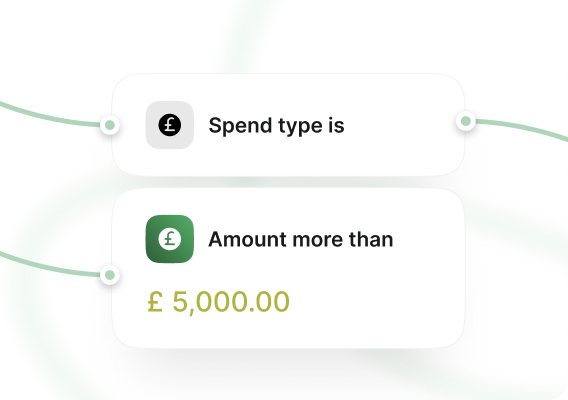
Spend policy that enforces itself
Set rules once and Spendesk enforces them automatically — blocking out-of-policy spend before it happens, not after.
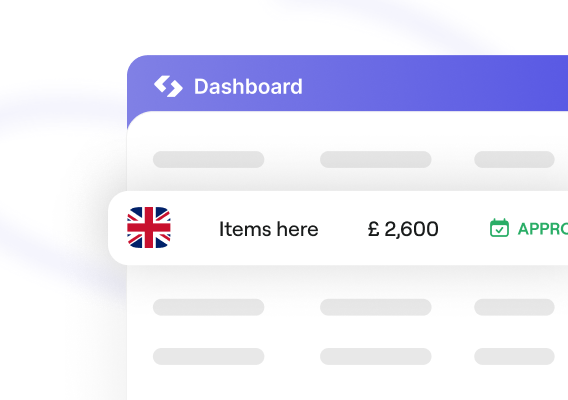
Multi-entity operations across Europe
Spendesk handles multi-entity operations across currencies and countries in one centralised platform — with consolidated reporting and entity-level spend controls, no manual reconciliation required.
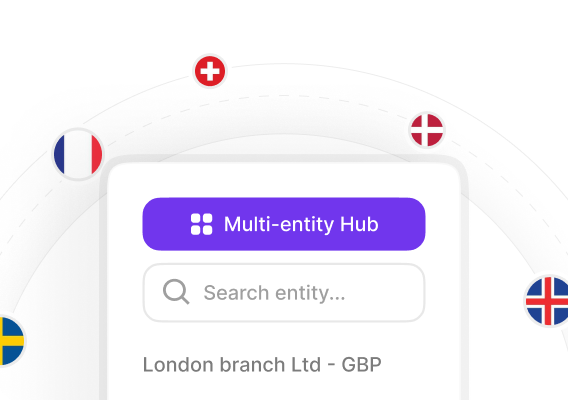
A complete spend operating model
Spendesk covers cards, expenses, approvals and procurement in one platform — replacing reactive clean-up with proactive spend oversight, across every team and entity.
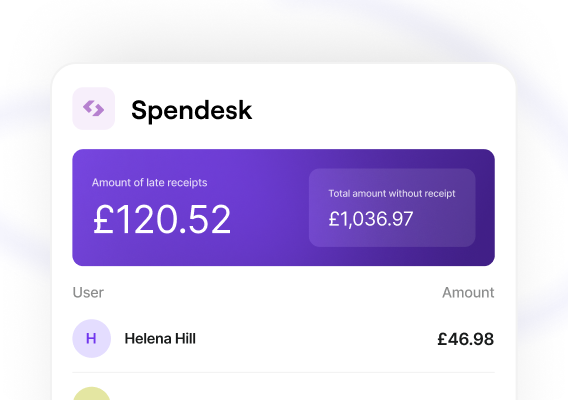
See how effortless spend control can be
Real-time tracking, automated alerts, and built-in controls that keep spending on budget without slowing teams down.